

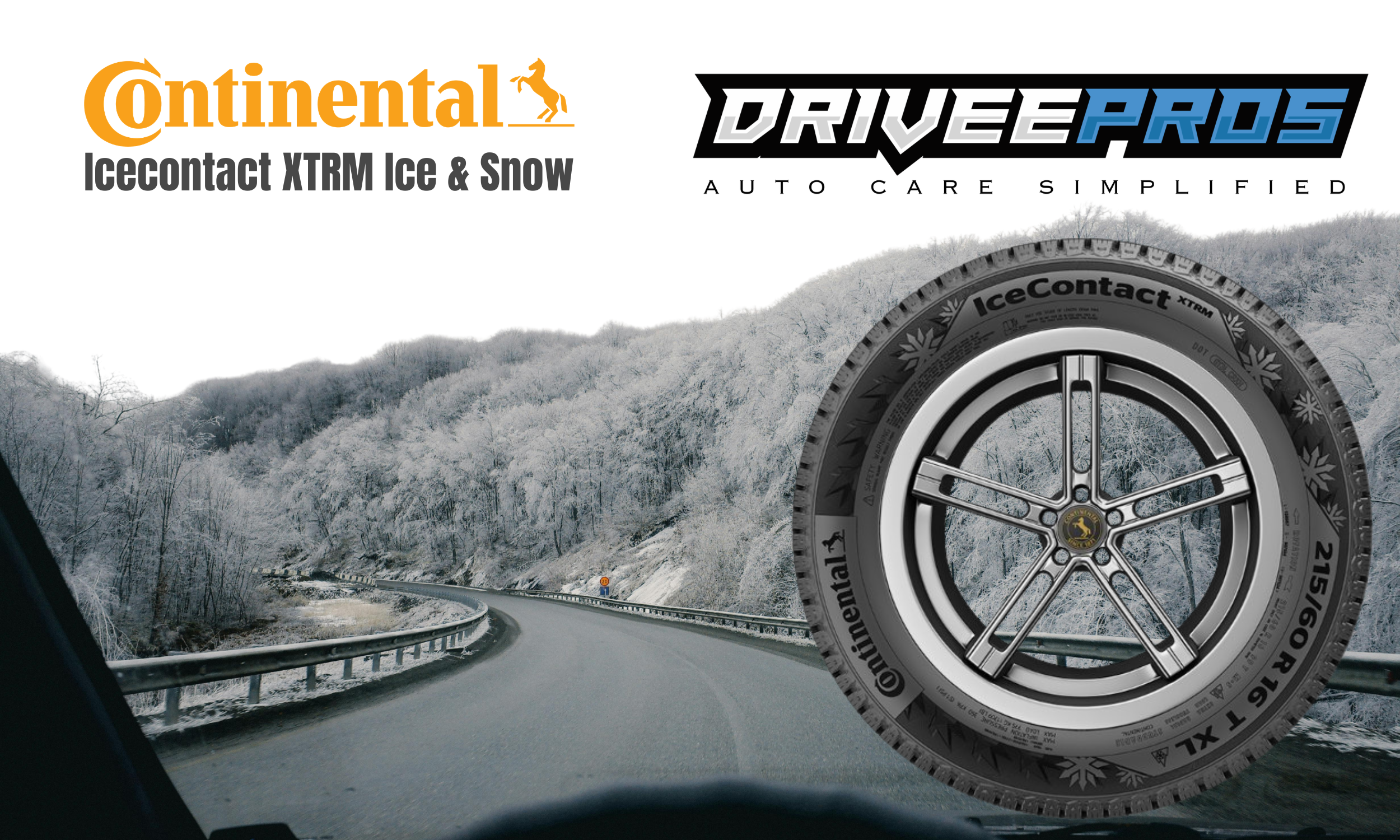
Continental IceContact XTRM Review: Is It a Good Winter Tire for Alberta?
Canadian winters can throw almost everything at a tire in the span of a few days: deep snow, polished intersections, freezing rain, slush, bare pavement and temperatures well below freezing.
The Continental IceContact XTRM was developed specifically with those kinds of Canadian winter conditions in mind.
Available in both studded and non-studded configurations, the IceContact XTRM is a premium winter tire designed for drivers who prioritize traction in snow and ice while still needing predictable performance during everyday winter driving.
For Alberta drivers dealing with everything from Calgary Chinooks to icy highways and snow-covered rural roads, that makes the IceContact XTRM an interesting option.
But is it the right winter tire for your vehicle? Here’s what you should know.
Continental IceContact XTRM at a Glance
Best suited for: Drivers facing serious Canadian winter conditions
Tire category: Winter / snow tire
Studded option: Yes
Non-studded option: Yes
Available wheel sizes: Approximately 15″–22″
Typical speed rating: T
Tread design: Directional winter tread
Best attributes: Ice traction, snow traction, slush evacuation and Canadian winter versatility
Vehicles: Available in sizes suitable for many passenger cars, crossovers and SUVs
DriveePros verdict: A strong premium winter tire for Alberta drivers who regularly encounter snow and ice, particularly those considering a studded winter tire.
What Sizes Does the Continental IceContact XTRM Come In?
One of the IceContact XTRM’s strengths is its wide range of available sizes.
Continental offers fitments covering roughly 15-inch through 22-inch wheels, allowing the tire to fit everything from smaller passenger vehicles to larger crossovers and SUVs.
Available sizes include fitments such as:
- 175/65R15
- 205/55R16
- 225/65R17
- 235/60R18
- 255/55R19
- 275/60R20
- 265/45R21
- 285/45R22
Exact availability, load index, XL designation and other specifications depend on tire size.
Do not choose a tire based only on wheel diameter. Your vehicle requires the correct combination of tire width, aspect ratio, wheel diameter, load capacity and other specifications.
DriveePros can help confirm the correct IceContact XTRM size for your specific vehicle.
What Is the Continental IceContact XTRM?
The Continental IceContact XTRM isn’t simply another European winter tire being sold in Canada.
Continental developed the IceContact XTRM in collaboration with Canadian tire distributor Groupe Touchette with Canadian winter conditions specifically in mind. That’s important.
Canadian drivers can encounter winter conditions that are considerably different from the relatively mild winter environments found in many other markets.
Our roads regularly transition between:
- Packed snow
- Deep snow
- Ice
- Freezing rain
- Slush
- Wet pavement
- Dry pavement
- Extreme cold
The IceContact XTRM was designed to operate across this mixture of conditions, with particular attention paid to snow, ice and slush performance.
Continental uses an aggressive directional tread pattern with large lateral grooves, extensive siping and dedicated technologies designed around ice traction.
It is also available with factory-installed studs for drivers who want even more traction on icy surfaces.
How Does the Continental IceContact XTRM Perform on Ice?
Ice performance is arguably where the IceContact XTRM becomes most interesting. The tire is designed with what Continental calls Crushed Ice Reservoirs surrounding its studs.
When a tire travels across ice, small amounts of crushed ice can accumulate around the contact point between the stud and the road. The reservoirs are designed to help move that material away from the stud so it can maintain more effective contact with the icy surface during braking.
Continental also uses dedicated stud retention technology designed to improve the connection between the stud and the surrounding tread.
Independent journalists who tested both versions of the IceContact XTRM on snow and ice reported a noticeable advantage for the studded version when braking and recovering grip on sheet ice. That doesn’t mean everyone needs studs.
But if your winter driving regularly involves icy highways, rural roads, steep approaches or roads where hard-packed snow becomes polished ice, the studded IceContact XTRM is the version we’d seriously consider.
Studded vs. Non-Studded IceContact XTRM
One of the biggest advantages of the IceContact XTRM is having both options.
Choose the non-studded IceContact XTRM if:
Most of your winter driving happens on maintained urban roads.
You regularly encounter snow and cold temperatures but relatively limited prolonged ice.
You want a premium winter tire without the additional road noise associated with studs.
You spend significant time driving on dry or cleared pavement.
For many Calgary commuters, the non-studded version may provide the better balance.
Consider the studded IceContact XTRM if:
You frequently encounter icy roads.
You regularly drive rural Alberta highways.
You commute early in the morning before roads have been treated.
You travel through mountain regions during winter.
You regularly drive roads where packed snow becomes polished ice.
Maximum winter traction is more important to you than minimizing road noise. Studs aren’t magic, and they don’t replace sensible winter driving. But on actual ice, they can provide another mechanical source of traction that a rubber compound alone cannot replicate.
How Does the IceContact XTRM Perform in Snow?
Snow traction is another major strength of the IceContact XTRM’s design.
Continental uses large lateral grooves across the tread designed to help the tire bite into snow while moving loose snow away from the contact patch. The aggressive directional tread also contains numerous smaller cuts called sipes. These create additional biting edges as the tread blocks contact snow and ice.
The result is a tire designed not only for accelerating through snow but also for maintaining control while braking and cornering. Independent Canadian testing has also been encouraging. Journalists testing studded and non-studded IceContact XTRMs on groomed snow reported relatively little difference between the two during normal snow driving, although the studded version showed an advantage under braking.
That reinforces an important point: You don’t necessarily need studs to get strong snow performance from the IceContact XTRM.
Studs become considerably more valuable when ice enters the equation.
What About Calgary Slush and Chinook Weather?
This is one reason we think the IceContact XTRM makes particular sense in Alberta. A Calgary winter isn’t simply five straight months of snow. Temperatures can swing dramatically. A Chinook can turn snow-covered roads into a mixture of water, slush and partially frozen snow, only for temperatures to drop again and turn those same roads into ice.
Continental designed the IceContact XTRM with dominant lateral grooves intended to evacuate slush from beneath the tire. That matters because a winter tire still needs somewhere to send the water and slush accumulating beneath the tread.
When a tire can’t evacuate that material effectively, the vehicle can begin riding over the slush rather than maintaining solid contact with the road. For Calgary drivers, we’d consider slush evacuation an underrated part of choosing a winter tire.
Is the Continental IceContact XTRM Good for Highway Driving?
Yes — with one qualification.
The IceContact XTRM is designed as a serious winter tire, so don’t expect it to behave exactly like a quiet touring all-season tire. The aggressive tread necessary for moving snow and slush can create additional road noise.
Studded versions will naturally be more noticeable on cleared pavement. However, Canadian reviewers who have spent time with the tire have reported stable behaviour in both urban and highway environments.
One Canadian automotive journalist who ran non-studded IceContact XTRMs on a Ford Escape over multiple seasons reported stable performance in city and highway driving, strong behaviour in snow and ice and relatively little wear during the test period.
That’s encouraging for Alberta drivers who might spend Monday driving through deep snow and Friday travelling down a completely dry Deerfoot Trail.
IceContact XTRM Tire Technology Explained
1. Groove Network
Large lateral grooves help generate snow traction while evacuating slush from beneath the tire. This helps the tire maintain contact with the road through the constantly changing conditions of a Canadian winter.
2. Crushed Ice Reservoirs
On studded versions, small reservoirs surrounding the studs help manage crushed ice beneath the tread. Their purpose is to help maintain stronger contact between the stud and the ice during braking.
3. Stud Retention Technology
The IceContact XTRM uses technology specifically designed to strengthen the interaction between its studs and the surrounding tread. That’s significant because keeping the studs properly seated throughout the tire’s service life is critical to maintaining the performance you bought them for in the first place.
4. Connected Centre Rib and Siping
The centre of the tire incorporates extensive siping to create additional biting edges for winter traction. Continental also incorporates anti-stone-trapping siping into portions of the tread. Together, these features contribute to the XTRM’s ability to deal with snow, ice and changing road surfaces.
Continental IceContact XTRM Pros and Cons
What We Like
Designed specifically for Canadian winters
Rather than simply adapting a winter tire developed for another market, the XTRM was developed with Canadian conditions in mind.
Excellent focus on ice performance
The studded version is particularly compelling for drivers regularly encountering ice.
Available studded or non-studded
Drivers can choose the configuration that better matches where and how they drive.
Aggressive snow and slush tread design
Large lateral grooves and extensive siping make sense for Alberta’s constantly changing winter conditions.
Large size range
Fitments are available for many passenger cars, crossovers and SUVs.
Premium manufacturer
Continental is one of the world’s major tire manufacturers and has extensive experience developing winter tires.
Things to Consider
It’s a premium winter tire
Drivers shopping strictly on price will find cheaper winter tires. But tires aren’t where we’d recommend chasing the lowest possible purchase price. The only parts of your vehicle touching the road are four relatively small contact patches.
Studs aren’t necessary for everyone
Someone driving primarily within Calgary may get everything they need from the non-studded version. Drivers regularly travelling icy rural roads may see considerably more benefit from studs.
Winter performance comes with compromises
Aggressive winter tread patterns can produce more noise and less precise dry-road handling than summer or performance-oriented all-season tires.
That’s the trade-off for substantially better cold-weather traction.
Who Should Buy the Continental IceContact XTRM?
We’d put this tire high on the shortlist for drivers who:
- Live in Alberta or another region with severe winters
- Regularly drive through snow and ice
- Want a premium winter tire
- Drive highways throughout the winter
- Travel outside major urban centres
- Need a winter tire for a car, crossover or SUV
- Want the option of factory-installed studs
- Prioritize winter traction over finding the cheapest possible tire
It’s particularly compelling for someone commuting between communities or travelling Alberta highways throughout the winter.
Think Calgary to Airdrie.
Calgary to Cochrane.
Calgary to Okotoks.
Calgary to Canmore or Banff.
Edmonton to surrounding communities. Or simply anyone who regularly leaves maintained urban roads.
Who Should Probably Choose Something Else?
The IceContact XTRM won’t automatically be the best winter tire for everyone. If your priority is the lowest possible price, there are less expensive winter tires.
If you spend almost all your time on cleared urban roads and prioritize quiet highway comfort, another premium studless winter tire may suit you better. And if you rarely drive during severe winter weather, paying for an aggressive studded setup probably doesn’t make sense.
The best winter tire isn’t necessarily the tire with the most aggressive specification. It’s the tire that matches where you actually drive.
That’s also why DriveePros doesn’t recommend choosing tires purely from online ratings. Your vehicle, driving habits, location, annual mileage and budget matter.
Is the Continental IceContact XTRM Worth It?
For the right driver, yes. The IceContact XTRM combines several things we like seeing in a Canadian winter tire:
- A design developed around Canadian winter conditions
- Serious snow capability
- Dedicated slush evacuation
- Strong emphasis on ice traction
- Studded and non-studded options
- A broad selection of sizes
- Technology specifically designed around stud performance and retention
It’s particularly attractive for Alberta drivers who don’t know what road conditions they’ll encounter from one week to the next.
The non-studded version should make the most sense for many urban drivers. For drivers regularly encountering hard-packed snow and ice, we’d give serious consideration to the studded version.
DriveePros Verdict: Continental IceContact XTRM
Best for: Alberta drivers wanting a premium, ice-focused winter tire.
Consider the studded version if: You regularly drive icy highways, rural roads or mountain routes.
Consider the non-studded version if: Most of your driving is urban but you still want serious snow and winter capability.
Skip it if: Your primary concern is simply finding the cheapest winter tire available.
Our Take
The Continental IceContact XTRM is exactly the kind of winter tire that makes sense for the unpredictable conditions we see in Alberta. It’s not the cheapest winter tire, and that’s not what it’s trying to be. Its value proposition is traction.
For drivers regularly dealing with snow, slush, freezing temperatures and ice, we’d put the Continental IceContact XTRM on the shortlist of winter tires worth considering.
Get a Continental IceContact XTRM Quote
Looking for Continental IceContact XTRM tires for your vehicle?
DriveePros sells tires directly to Alberta drivers and provides 100% mobile tire service.
Tell us what you drive and we’ll help determine the correct tire size, check current IceContact XTRM availability and provide you with a quote.
Get Your IceContact XTRM Quote
Call (587) 955 6177
Or Fill Out Our Quote Request Form Here. > REQUEST QUOTE <
Not sure whether you should choose the studded or non-studded IceContact XTRM? Include how and where you normally drive in your quote request. The DriveePros team can help determine which version makes more sense for your driving conditions.
Tires delivered. Service brought to you. No tire shop waiting room required.
Frequently Asked Questions
Is the Continental IceContact XTRM a good winter tire?
Yes. The IceContact XTRM is a premium winter tire developed specifically around Canadian winter conditions, with features designed for snow, ice and slush.
Is the Continental IceContact XTRM available with studs?
Yes. The IceContact XTRM is available in both studded and non-studded configurations, depending on size and availability.
Is the IceContact XTRM good on ice?
Ice traction is one of the XTRM’s major focuses. The studded version incorporates crushed-ice reservoirs and stud-retention technology designed specifically around maintaining effective stud-to-ice contact.
Do I need the studded IceContact XTRM?
Not necessarily. Drivers who spend most of their time on maintained city roads may be better served by the non-studded version. Drivers who regularly encounter icy rural roads, highways or mountain conditions have a stronger case for choosing studs.
Is the Continental IceContact XTRM good for Calgary winters?
We think it’s particularly well suited to Calgary because our winter roads can transition between snow, ice, slush, water and dry pavement. Its tread was designed specifically around the varied conditions encountered during Canadian winters.
Is the IceContact XTRM good for SUVs?
Yes. Continental offers IceContact XTRM sizes suitable for many crossovers and SUVs in addition to passenger cars. Always confirm that the specific size and load rating are appropriate for your vehicle.
What sizes does the Continental IceContact XTRM come in?
The IceContact XTRM is available across a broad range of fitments covering approximately 15-inch through 22-inch wheel diameters. Exact availability varies by tire size and configuration.
Does the Continental IceContact XTRM have a warranty?
Continental replacement tires sold in Canada are backed by Continental’s Total Confidence Plan, subject to its eligibility requirements and limitations. Continental currently advertises benefits including a 60-day customer satisfaction trial, limited warranty protection, road-hazard coverage and three years of flat-tire roadside assistance on eligible purchases. Coverage varies by product and requires compliance with Continental’s terms, so buyers should confirm the applicable coverage for their specific tires.
Where can I buy Continental IceContact XTRM tires in Alberta?
DriveePros sells tires directly to customers and offers mobile tire service. Submit the quote form above with your vehicle information and we’ll check the appropriate IceContact XTRM fitment and availability.
Sources & Product Information
Technical information for this article was researched using Continental Canada’s IceContact XTRM product information and Canadian Continental documentation. Performance observations also reference published Canadian automotive testing of the IceContact XTRM.
Tire performance varies depending on vehicle, tire size, tread depth, temperature, road conditions and driving behaviour. Always use the tire size and specifications recommended for your vehicle.
We write rarely, but only the best content.